
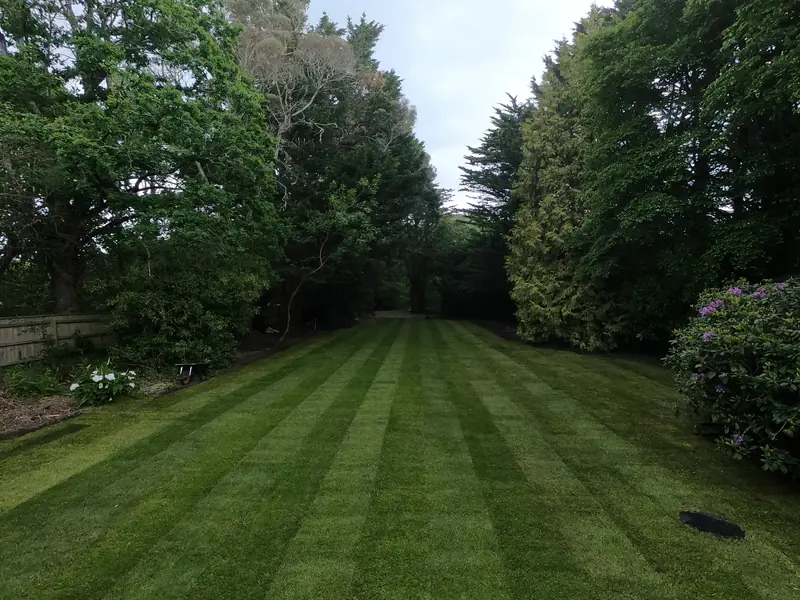
Lawn guide
When is the best time to lay turf in the UK?
Which months suit new turf best, what changes in summer and winter, and how to care for a lawn after laying.
Turf can be laid for much of the year, which surprises a lot of people. What changes from season to season is how much help it needs to root. Get the timing and aftercare right and a new lawn settles quickly; get them wrong and it can yellow, shrink or lift at the edges.
This guide walks through the year as it usually plays out in the south of England and explains what each season means for a new lawn.
Autumn: usually the easiest time
September to November is often the best window. The soil is still warm from summer, so roots grow quickly, while cooler air and more frequent rain mean far less watering. By the following spring the lawn is well rooted and ready for summer use. The main thing to watch is leaves: keep them raked off new turf so they do not block light and hold damp against the grass.
Spring: a close second
March to May also works well. As the soil warms, the grass starts growing strongly and roots establish fast. Spring weather in Hampshire can turn dry for weeks at a time, though, so you need to be ready to water regularly, especially in a dry April or May. Laying in spring gives you a lawn that is ready for the summer holidays.
Summer: possible, with plenty of water
Turf can go down in June, July and August, but heat and long dry spells make it hard work. New turf dries out quickly and can shrink, leaving gaps between rolls. If you lay in summer, it should go down the day it arrives, be watered thoroughly straight away and then every day, ideally early morning or evening, until it has rooted. Hosepipe bans are worth keeping in mind too.
On sandy soils, which drain fast, summer laying is particularly demanding. On clay, the ground can bake hard, so preparation and watering both need extra care.
Winter: only when the ground allows
In mild spells turf can still be laid, and it needs little watering, but roots grow slowly in cold soil. It should never go down on frozen, waterlogged or snow covered ground, and you should keep off frosty turf. Heavy clay gardens in the New Forest are often too wet to work in midwinter without damaging the soil structure, so we may suggest waiting a few weeks.
Ground first, calendar second
The time of year matters, but the condition of the ground matters more. Turf laid on well prepared, level topsoil in July will usually do better than turf thrown onto compacted, stony ground in October. Old grass and weeds should be removed, the soil loosened, rubble cleared, drainage sorted and enough topsoil spread to give roots depth. Our turfing or seeding guide and how to level a lawn guide go into this in more depth.
Aftercare in the first weeks
- Water thoroughly straight after laying, then regularly until the turf resists a gentle tug at a corner
- Water deeply rather than little and often, so roots grow down
- Keep foot traffic, children and pets off as much as possible for the first two to three weeks
- Make the first cut a light one, with the mower on a high setting, once the turf has rooted
- Hold off on feeding until the lawn is established
- Rake off fallen leaves in autumn
Planning your new lawn
If you are thinking about a new lawn, it helps to get in touch a little ahead of the season you are aiming for, so the site visit, quote and booking can all happen in good time. A lawn is often laid as the final stage of a bigger job such as a new patio or garden makeover, in which case we plan the timing around the rest of the work. You can see our prices in the turf laying cost guide. Use the enquiry form below or call to arrange a free site visit.
Frequently asked questions
Can turf be laid in the rain?
Light rain is fine and even helps. Heavy, persistent rain that leaves the ground waterlogged is not, because working wet soil compacts it and damages its structure.
How long can turf sit in rolls before it is laid?
Not long. Turf should ideally be laid the day it is delivered, especially in warm weather, as rolled grass heats up and yellows quickly.
When can I mow new turf?
Once it has rooted and resists being lifted at a corner, which is often after two to three weeks in good growing weather. Keep the first cut high and light.
Related services
Turfing and lawn restoration
Fresh, level lawns using quality turf, or low-maintenance artificial grass installed with proper preparation and edging for a neat, realistic finish.
Find out moreGarden makeovers and transformations
End-to-end garden renovations, from clearing and reshaping to new hard landscaping, planting and finishing details. We manage the whole process so you can enjoy the result without the stress.
Find out moreFree quotes
Get your free, no obligation quote
Tell us a little about your garden and we will be in touch to arrange a free site visit. Prefer to talk? Give Josh a call.
Josh Rehel, Director. Based near Hythe, covering the New Forest and south Hampshire.