Cost guide
Whole-garden transformation: costs and how to plan one
What a complete garden transformation usually costs, how the money usually splits, and how to plan the work in sensible stages.
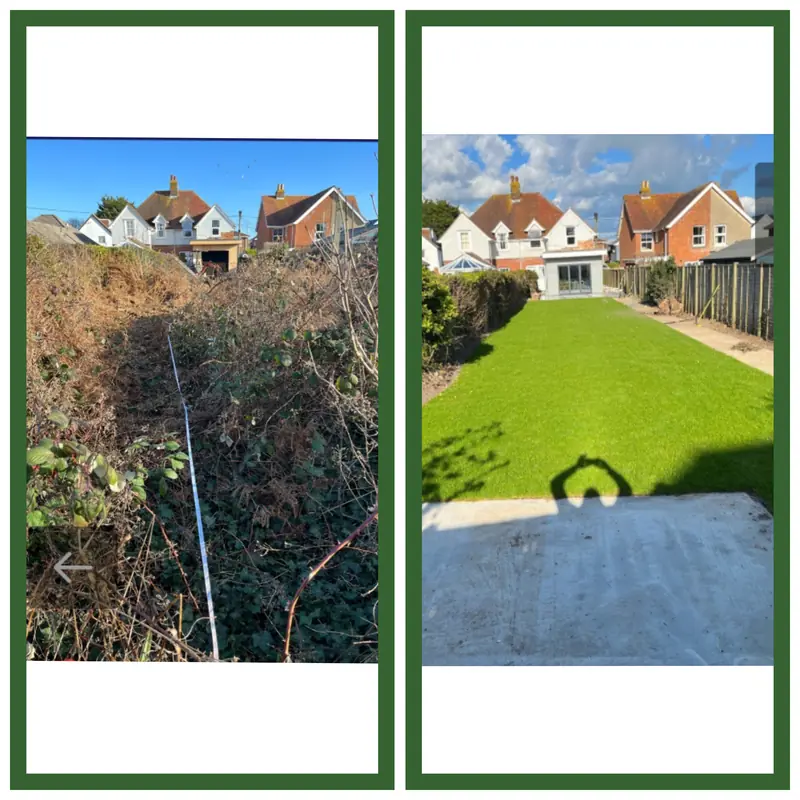
A whole-garden transformation is the largest outdoor project most homeowners take on. It usually combines clearance, groundwork, a patio, lawn, boundaries, planting and often a structure such as a pergola or deck. Because so many parts are involved, planning the whole garden first and then building it in the right order makes a real difference to both cost and result.
This guide gives the budget we usually work to for a full transformation, explains where the money tends to go, and walks through how to plan the project from first idea to finished garden.
What a complete garden transformation usually costs
Full garden transformation
usually £10,000 to £35,000
Depending on the size of the garden and the specification
Indian sandstone patio
from £140 per m2
A common element within a transformation
Artificial grass
from £55 per m2
Including dig-out, sub-base and laying
New turf
from £45 per m2
Including dig-out, levelling and topsoil, or £20 per m2 laid onto prepared ground
All the prices on this page are our own supply and fit rates, including materials, labour, preparation and waste removal. Final prices depend on access, ground conditions and materials, and every job is quoted after a free site visit.
Where the budget usually goes
Hard landscaping takes the largest share in most projects, often half or more of the total: patios, paths, walls and steps. Groundwork and clearance come next, especially where levels change or old concrete has to come out. Lawns, planting and finishing touches are a smaller share but make the garden feel complete. Knowing this split helps you decide where to save and where to spend.
Planning in the right order
- Start with how you want to use the garden: dining, play, growing, quiet seating
- Fix the layout and levels before choosing materials
- Plan drainage, power and lighting runs before any paving goes down
- Build hard landscaping first, then lawns, then planting
- Leave a contingency of around ten percent for what lies under the surface
Phasing a premium project
Many people spread a large transformation over two or three stages. The key is to plan the whole garden first, so each stage fits the next and nothing has to be dug up later. A common order is clearance, levels and patio first, then boundaries and structures, with lawn and planting last. Spring and early autumn are good times for turf and planting, while hard landscaping can go ahead in most months.
Choosing who to work with
On a large project, ask to see photos of comparable work, ask who will actually be on site each day, and expect a written quote broken down by area. A good contractor will tell you where a cheaper material would work just as well and where it would not. Keeping one team responsible from start to finish avoids gaps between trades and makes it clear who to call if anything needs attention.
Frequently asked questions
How long does a full garden transformation take?
Most medium projects take several weeks on site. Larger gardens with level changes can take longer. Planning and design add time before work starts.
Do I need a garden designer?
Not always. Simpler layouts can be planned at a site visit. Complex, sloping or premium gardens benefit from drawn plans so everyone works to the same design.
Can I live at home during the work?
Yes. Most people do. Access through a side gate and a clear daily routine keep disruption to a minimum.
Related services
Garden makeovers and transformations
End-to-end garden renovations, from clearing and reshaping to new hard landscaping, planting and finishing details. We manage the whole process so you can enjoy the result without the stress.
Find out moreGarden design and outdoor planning
Thoughtful design that balances beauty, practicality and the unique character of your plot. We help you plan layouts, levels, planting and features so the finished garden feels natural and works for everyday life.
Find out moreFree quotes
Get your free, no obligation quote
Tell us a little about your garden and we will be in touch to arrange a free site visit. Prefer to talk? Give Josh a call.
Josh Rehel, Director. Based near Hythe, covering the New Forest and south Hampshire.