
Cost guide
How much does a new fence cost per metre?
Our prices per linear metre, and what to ask about posts, gravel boards and removal.
Fencing is usually priced per metre run at a set height, most often 1.8 metres. That makes it easier to compare quotes than many garden jobs, as long as you check that each quote covers the same posts, boards and removal.
Below is what we charge per metre, the choices that make the biggest difference to how long a fence lasts, and the extras that can be missed off a first price.
Our fence prices per linear metre
Fencing, supply and fit
£55 to £115 per linear metre
Depending on the panel style and whether the posts are timber or concrete
All the prices on this page are our own supply and fit rates, including materials, labour, preparation and waste removal. Final prices depend on access, ground conditions and materials, and every job is quoted after a free site visit.
Posts make the biggest difference
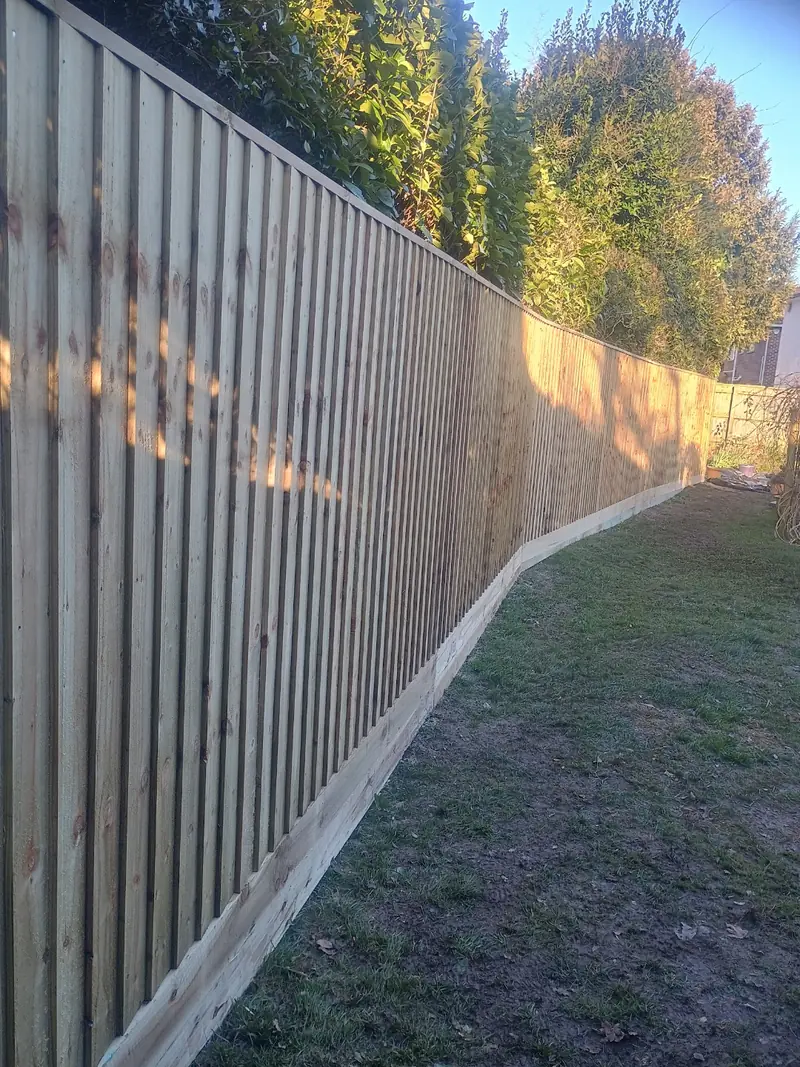
Most fences fail at the posts, where timber meets wet soil. Concrete posts with a concrete or timber gravel board at the bottom keep the panels or boards off the ground and do not rot. Timber posts look softer and suit some gardens, but they should be well treated and set properly. In exposed gardens near the coast, a closeboard fence built on site with arris rails stands up to wind better than lightweight panels.
Extras worth checking
- Taking down and disposing of the old fence
- Breaking out old concrete post footings
- Trellis toppers, usually a modest extra per panel
- Gates, which are priced separately and vary with size and hardware
- Stepping the fence on sloping ground
Typical UK repair and replacement figures
If you only need part of a fence put right, the figures below give a sense of scale. Each one is a typical UK guide figure, not a fixed quote, and none of them is our price. They come from a national price guide published by Fantastic Services in September 2026 and include VAT.
- Repairing a single panel: £40 to £100 (typical UK guide figure, not a fixed quote)
- Replacing a single panel: £60 to £120 (typical UK guide figure, not a fixed quote)
- Replacing a post, fitted: £100 to £180 per post (typical UK guide figure, not a fixed quote)
- Replacing a gravel board: £30 to £70 (typical UK guide figure, not a fixed quote)
For a full new fence, use our own supply and fit price of £55 to £115 per linear metre shown above, which includes materials, labour, preparation and waste removal. The repair figures here are only a guide for smaller jobs where most of the fence is sound.
What changes the price
- Height: a taller fence needs bigger panels or more boards, longer posts and deeper footings
- Access: panels and concrete posts carried through a house or down a narrow side passage take longer to move
- Removing the old fence: taking it down, breaking out old footings and disposing of the waste all add time
- Slope: on falling ground the fence is stepped or raked, which means extra cutting and more careful setting out
- Gates: a gate adds to the cost, depending on its size, material and fittings
Boundaries and neighbours
Before replacing a shared fence, check your deeds for who is responsible and talk to your neighbour. It is worth agreeing which side the good face will show, and whether access to their garden is needed. As a general guide, fences up to two metres high do not usually need planning permission, or one metre next to a road used by vehicles.
The usual two metre limit applies to fences that are not next to a highway. For a front boundary, or if your home is a listed building, check with your local council before work starts. Who owns a fence depends on what your deeds say, not on which side the posts stand, so the old idea that the posts always face the owner is not a reliable guide.
Spending well
If budget is limited, put the money into posts and gravel boards rather than fancy panels. A plain fence on good posts will outlast an attractive one on poor posts, and panels can be replaced later without disturbing the structure. A good quote will state the post type, footing method and board specification so you can see what you are paying for.
Fencing in exposed and coastal gardens
Gardens near the Solent and on open edges of town take strong gusts from the south west. Panels act like sails and can blow out between posts, while a closeboard fence with boards nailed to rails lets each board flex slightly and is easy to repair one board at a time. In these gardens the extra cost of a sturdier build is usually repaid by fewer storm repairs.
Frequently asked questions
How long does a new fence take to install?
A typical garden run of 15 to 25 metres often takes one to three days, depending on removal of the old fence and ground conditions.
Are concrete posts worth it?
In most gardens, yes. They do not rot, and panels can be swapped later without digging out the posts.
Who pays for a shared fence?
It depends on your deeds. Many neighbours agree to share the cost, but there is no automatic rule, so check before work starts.
Is it cheaper to repair a fence or replace it?
If the posts are sound, swapping a damaged panel or gravel board is usually far cheaper than a new run. Once several posts are rotten or loose, replacing the whole fence often makes more sense than paying for repeated repairs.
Does the side the posts are on show who owns the fence?
No. Ownership depends on what your deeds say, not on which side the posts stand. If the deeds are unclear, talk to your neighbour before any work starts.
Free quotes
Get your free, no obligation quote
Tell us a little about your garden and we will be in touch to arrange a free site visit. Prefer to talk? Give Josh a call.
Josh Rehel, Director. Based near Hythe, covering the New Forest and south Hampshire.