Lawn guide
Turfing or seeding a new lawn: which is better?
A plain comparison of laying turf and sowing seed, so you can choose the right way to start a new lawn.
There are two ways to get a new lawn: roll out turf that has already been grown on a farm, or sow grass seed and wait for it to come through. Both can give you a good lawn. They differ in how fast you can use it, how much care it needs at the start and how much risk there is along the way.
We lay turf as part of our lawn work, so this guide explains honestly where seed can make sense too, and what matters more than either choice: the ground underneath.
How turf works
Turf arrives in rolls of established grass with a thin layer of soil and roots. It is laid tightly onto a prepared, level bed of topsoil, firmed down and watered. You get a green lawn on the day it goes down, and in normal growing weather the roots knit into the soil below within a few weeks.
Because the grass is already thick, weeds have little chance to get going, and there is no bare soil for birds to raid or heavy rain to wash away. The main demand is watering, which must be steady until the roots have taken hold, especially in warm or windy weather.
How seeding works
Seed is spread over the same kind of prepared bed, raked in lightly and kept moist. In mild, damp weather the first shoots show within a week or two, but it takes a full growing season or more before the lawn is thick enough for regular use.
During that time the bare soil is open to weeds, birds, cats and children, and a heavy storm can move seed into patches. Seed also has a narrower window: it needs warm soil and reliable moisture, which in southern England usually means early autumn or mid spring.
Comparing the two side by side
- Speed: turf looks finished straight away and can take light use within a few weeks; seed takes months
- Upfront cost: seed is far cheaper to buy, turf costs more but saves time and reseeding
- Choice of grass: seed offers a wider range of mixes for shade or hard wear; turf usually comes in a few standard grades
- Weeds and erosion: turf covers the soil at once; seed leaves it exposed while it grows
- Timing: turf can go down for much of the year if the ground is workable and watered; seed is more fussy about season
- Aftercare: both need watering, but seed needs a longer period of care and patience
When turf is the better choice
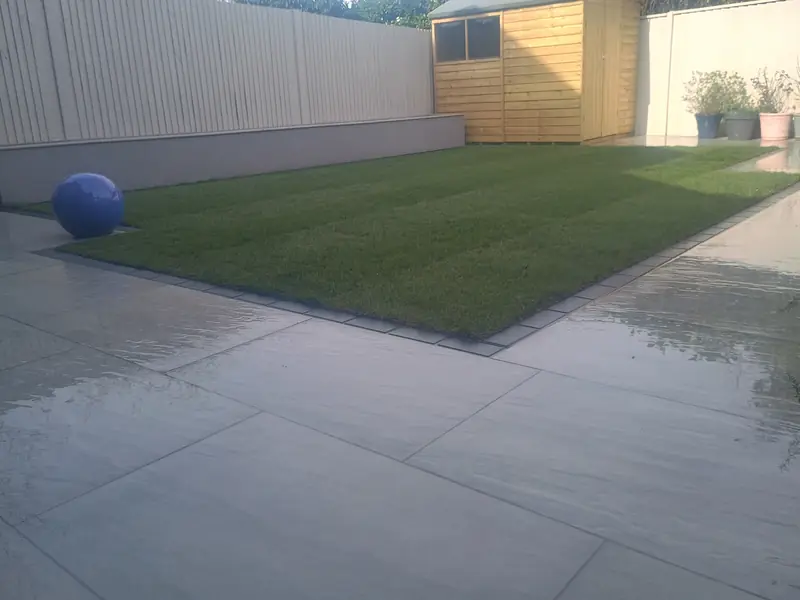
Turf suits most family gardens where people want to use the lawn soon, where there are children or pets, and where a new patio or garden makeover has just been finished and a bare patch of earth would spoil the result. It is also the safer option on slopes, where seed can wash downhill before it roots, and in gardens that see a lot of birds.
When seed can make sense
Seed can work for patching small bare areas in an existing lawn, for large areas where budget matters more than speed, and for heavily shaded corners where a specialist shade mix will cope better than standard turf. It is also handy for overseeding a thin lawn each autumn to thicken it up.
Preparation matters more than the choice
Whichever route you take, the lawn will only be as good as the ground beneath. That means removing the old grass and weeds, breaking up compacted soil, clearing stones and rubble, sorting any drainage problems and spreading enough good topsoil to give roots depth. On New Forest clays that may mean extra work to stop the lawn sitting wet; on sandy ground in places like Bournemouth or Ringwood, it means more topsoil to hold moisture.
Levelling is the last step and one of the most important. Bumps and hollows left at this stage show up in every mow for years. Our guide on how to level a lawn explains the process in more detail, and our turf laying cost guide sets out what new turf costs with and without full preparation.
Getting a new lawn laid
If you would like a new lawn, we can visit, look at the ground, talk through turf and the preparation it needs, and give you a clear written quote. Use the enquiry form below or call us to arrange a free site visit.
Frequently asked questions
Is turf or seed better for a garden with dogs?
Turf is usually better. It gives a covered, rooted surface much sooner, while seed needs weeks of being kept off and can be scuffed up before it establishes.
Can I mix turf and seed in the same garden?
Yes. A common approach is turf for the main lawn and seed for small gaps or awkward shady corners where a specialist mix suits better.
Will a seeded lawn look as good as turf in the end?
It can, given time, good weather and careful aftercare. Turf simply gets you to a finished looking lawn much faster and with less risk.
Related services
Turfing and lawn restoration
Fresh, level lawns using quality turf, or low-maintenance artificial grass installed with proper preparation and edging for a neat, realistic finish.
Find out moreGarden makeovers and transformations
End-to-end garden renovations, from clearing and reshaping to new hard landscaping, planting and finishing details. We manage the whole process so you can enjoy the result without the stress.
Find out moreFree quotes
Get your free, no obligation quote
Tell us a little about your garden and we will be in touch to arrange a free site visit. Prefer to talk? Give Josh a call.
Josh Rehel, Director. Based near Hythe, covering the New Forest and south Hampshire.